
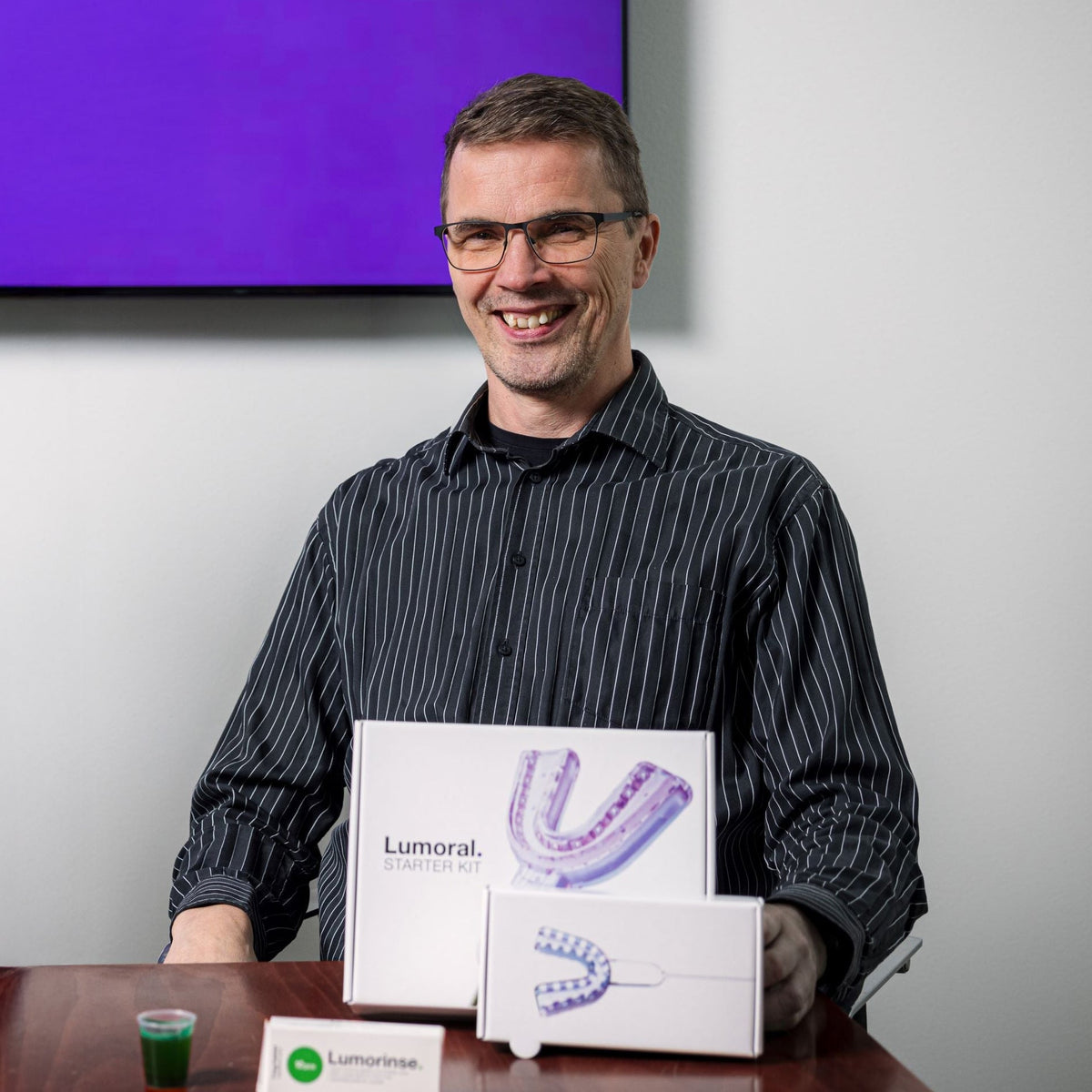
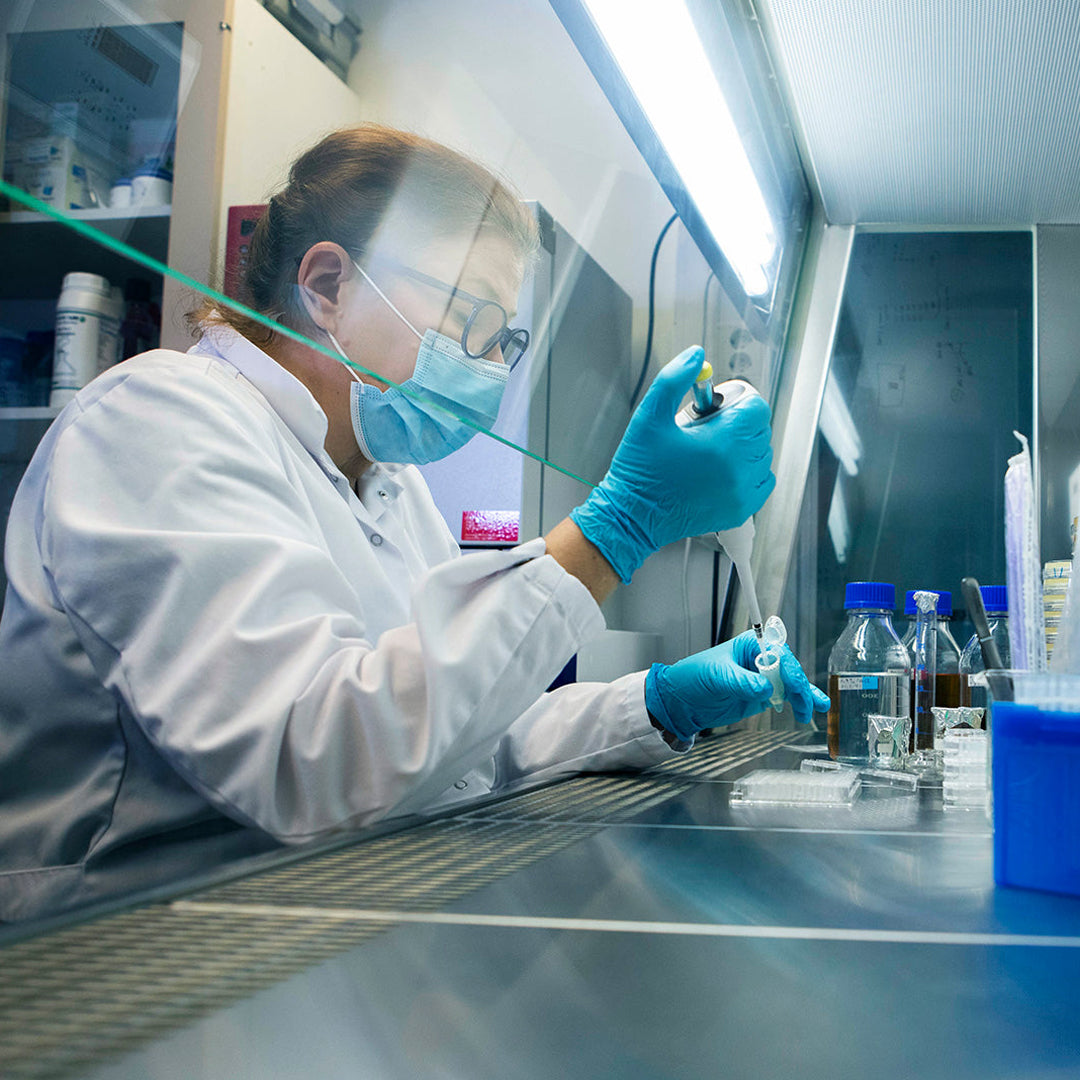
Lumoral Research
"Success in science is only achievable with deep, cross-disciplinary collaboration. We want to highlight and thank the contributions of all the professionals and students in different universities, and partners in private and public dental clinics. We also must express our gratitude to the voluntary study participants; without them, clinical trials are not possible."
-Mikko Kylmänen, Clinical Project Manager, Koite Health Ltd.
Follow Mikko on LinkedIn for more insights.
200 Patients in the largest RCT
The HOPE-CP trial followed 200 periodontal maintenance patients, making it the largest Lumoral randomised clinical trial to date.
760+ Patients enrolled
More than 760 patients have been enrolled across Lumoral studies, covering different patient groups, indications and clinical settings.
8+ Years of research
Lumoral has been studied for more than eight years in sponsored and investigator-led clinical trials, and in multiple thesis and test projects.
7 Countries running Lumoral trials
Lumoral research is active across seven countries, reflecting growing international interest in light-activated biofilm control.
In research cooperation with











A summary of study results – sponsored studies
A randomised clinical trial on stage I to III periodontitis: 200 subjects, in 2026
HOPE-CP, the largest clinical study on periodontology in Europe, shows that periodontal treatment outcomes improve significantly when daily Lumoral treatment is added to the routine of periodontal home care.
In the study, supportive periodontal care (SPC) was standardized according to the EFP guidelines, including new electric toothbrushes that were given to all participants. Half of the participants were randomized to the SPC+Lumoral group, and half to the SPC (Control) group.
Main results:
- In 51% of Lumoral users, the gingival inflammation index (BOP), an indicator of inflammation, was reduced to healthy levels (BOP less than 10%), and 23% in the Control group.
- 63% of participants in the Lumoral group had VPI less than 10%, 38% in the control group.
- 14% of participants in the Lumoral group had no deep gingival pockets at the end of the period, and 8% in the control group.
- The differences in BOP (p<0.0001), VPI (p=0.0011), CAL (p=0.066), and deep periodontal pocket (p=0.0269) values were significant between the groups.
Adverse events were monitored closely. No serious adverse events related to Lumoral were found, and no differences were found between the groups in the prevalence of minor adverse events.
The published study report can be found here: https://doi.org/10.1002/jper.70082
A randomised, multicenter clinical trial on stage I to III periodontitis: 41 subjects, in 2026
LumoNorth2022, a randomized multi-center clinical trial, showed how professional care can be significantly improved when daily Lumoral treatment is added to the routine of periodontal home care.
In the study, supportive periodontal care (SPC) was standardized according to the EFP guidelines. All participants received new electric toothbrushes, and half were randomized to the SPC+Lumoral group and half to the SPC Control group.
Main results
- The full mouth BOP% reduction was significantly greater in the SPC+Lumoral group compared with the SPC Control group between the baseline and the final 6-month visit (p = 0.03)
- In the full mouth VPI% measurement, the SPC+Lumoral group had significantly less plaque at the 6-month visit compared with the baseline (p = 0.04), while there was no statistical reduction in the plaque levels in the SPC Control group.
- In the SPC+Lumoral group, CAL decreased significantly from baseline to both 3 and 6 months, and a significant overall time effect was observed across baseline, 3 months, and 6 months. In contrast, no statistically significant within-group change in CAL was observed in the SPC Control group
- The within-group differences in BOP% (p<0.0001), VPI% (p=0.04), CAL (p=0.0122), and deep periodontal pocket (p=0.0043) values were significant in the SPC+Lumoral group from Baseline to the 6-month time point.
- No serious adverse events related to Lumoral were found.
The published study report can be found here: https:///doi.org/10.1002/jper.70120
A randomised, assessor-blinded clinical trial on adolescent patients starting fixed orthodontic treatment: 41 subjects, in 2026
Clean Bracket, a randomized, assessor-blinded clinical trial, showed how Lumoral treatment can significantly help professionals improve their patients’ inflammation control who are receiving fixed orthodontic treatment
In the study, all 41 participants were between 15 and 17 years of age, starting fixed orthodontic treatment at Baseline. Half of them were randomized to receive the standard prophylactic protocol (SPP Control group), and half received standard prophylactic protocol + Lumoral (SPP+Lumoral group). Standard prophylactic protocol included professional polishing at Baseline and detailed home-care instructions following a standardised prophylactic protocol for fixed orthodontic treatment
Main results
- All participants had BOP below 10% at Baseline. In the SPP+Lumoral group, 85% still had BOP below 10% at the 12-week time point, and 58% in the SPP Control group.
- BOP% decreased with 55,0% of participants in the SPP+Lumoral group (21,1% in the SPP Control group), increased with 35,0% (78,9%% in the SPP Control group), and remained unchanged in 10,0% (0% in the SPP Control group).
- Plaque scoring was performed as a dichotomous assessment at six sites per tooth (mesio-buccal, buccal, disto-buccal, mesio-lingual, lingual, disto-lingual) for the presence or absence of visible plaque at both baseline and 12-week visits. The overall number of positive plaque points decreased 15,8% in the SPP+Lumoral group and 9,5% in the SPP Control group.
- The median orthodontic plaque index (OPI) was lower in the SPP+Lumoral group (2,2) compared to the SPP Control group (2,5) at the 12-week measurements.
- No serious adverse events related to Lumoral were found.
The published study report can be found here: https://doi.org/10.3390/dj14090564
A randomized plaque study in healthy volunteers: 15 subjects, to be published in February of 2027
A plaque study by dental hygiene students, supervised by a professional dental hygienist, was carried out to investigate the effectiveness of the antimicrobial Lumoral method in reducing oral biofilm as part of oral self-care in healthy volunteers aged 18-70 years.
The study results showed that using Lumoral twice a week is also beneficial for people in good health, as the biofilm reduction was significantly greater in the experimental group of Lumoral users (n=7) than in the Control group (n=8).
A summary of study results – investigator-led studies
A randomized, crossover study in healthy volunteers: 30 subjects, in 2026
A plaque study with healthy young adult volunteers, aged 20 to 25, was carried out by dentistry students, supervised by a professional dentist, to investigate the effectiveness of the antimicrobial Lumoral method in reducing oral biofilm as an adjunct to oral self-care.
All participants had two periods during the trial: 2 weeks with standard oral self-care, and 2 weeks with standard oral self-care with daily Lumoral use, with a 2-week crossover period in between. Measurements were taken at the beginning and end of each 2-week treatment period. The self-care instructions for the standard care periods emphasized the importance of brushing the teeth twice a day with fluoride toothpaste, and the use of floss, flossers, silicone toothpicks, and/or interdental brushes was recommended for the cleaning of interdental spaces on a daily basis.
The study results show that Lumoral treatment can serve as a clinically relevant adjunct to daily oral home care, enhancing plaque control even in individuals with good oral hygiene.
Main results:
- Significant reductions in plaque scores were observed during the dual-light aPDT treatment phase
- Pooled data analysis separately for the standard care+Lumoral use period and the standard care period, additional Lumoral use resulted in a consistent and statistically significant decrease in plaque scores (p < 0.0001). In contrast, plaque scores during the standard care period showed greater variability, and no statistically significant change was observed (p = 0.107).
The published study report can be found here: https://doi.org/10.1016/j.jdent.2026.106641
A randomized study of elderly people living in 24-hour care facilities: 28 subjects, 2026
A randomized study was carried out to investigate the effect of Lumoral treatment on oral health among older people living in assisted living facilities
28 participants of 51 to 95 of age were included in the trial with a 2-month follow-up period. All measurements were conducted by oral healthcare professionals using a mobile dental unit. Dental hygiene students and the care facility personnel assisted. All participants were given a new electric toothbrush and provided with an appropriately sized interdental brush with personal guidance for the best possible self-care, and they were randomized to the conventional oral self-care group and the conventional oral self-care+Lumoral group.
The study results show that Lumora treatment may be an effective adjunct to conventional oral self-care in assisted living facilities.
Main results:
- The intensified oral self-care resulted in a VPI% decrease in both groups.
- CPITN (Community Periodontal Index of Treatment Needs) measurements showed a significant reduction in the self-care+Lumoral group, but not in the self-care Control group.
- No adverse event with Lumoral use were detected during the study.
The published study report can be found here: https://doi.org/10.1002/jper.70120
A randomised clinical trial on peri-implantitis (full report): 40 subjects, in 2025
This clinical study investigated the Lumoral use for preventing and treating inflammation around dental implants over a four-week study period.
All 40 participants were given oral hygiene instructions and were randomized into two groups: one followed regular oral hygiene, and the other used the Lumoral device additionally.
The results showed that the Lumoral group had a clear reduction in gum inflammation, with significantly lower bleeding and inflammation marker levels (aMMP-8). No similar improvement occurred in the control group.
The treatment was safe, easy to use at home, and well tolerated.
The published study report can be found here: https://pmc.ncbi.nlm.nih.gov/articles/PMC12086973/
A case report of a periodontitis patient: a 78-year-old person (full report), in 2022.
A case report on a 78-year-old male patient with vascular dementia found that Lumoral antibacterial treatment was effective in eliminating harmful oral bacteria while also treating advanced gum disease. Recovery from severe periodontal disease over a 13-month follow-up period was excellent, the study reveals. Oral hygiene improved markedly and the number of infected gum pockets decreased significantly. In addition, clinical adherence improved. Only one infected periodontal pocket remained. This can be argued to be at least partly due to occlusal trauma, the researchers point out.
A pilot study on peri-implantitis (full report): 7 subjects, in 2022
A small pilot study tested the Lumoral® dual-light antibacterial therapy, a home-use device that combines blue and near-infrared light with a special mouth rinse (containing indocyanine green). Seven people with peri-implant disease used the treatment daily for four weeks alongside their normal oral hygiene routine.
After one month, results showed:
- Less dental plaque buildup.
- Reduced gum bleeding and inflammation around dental implants.
- Lower levels of the enzyme aMMP-8, a biological marker linked to gum tissue breakdown.
- No harmful effects were reported.
These findings suggest that regular home use of Lumoral can help improve implant health and reduce inflammation, supporting professional dental care.
The published study report can be found here: https://www.mdpi.com/1467-3045/44/3/85

The importance of research
Clinical device research is essential to ensure that healthcare devices are safe, effective, and meet the necessary performance standards. High-quality clinical trials, grounded in scientific evaluation, provide both users and healthcare professionals with confidence in the safety, reliability, and effectiveness of medical devices.

Standards are the foundation
International standards are the cornerstones of the clinical study designs for Lumoral. These include ISO 14155 GCP (Clinical Trials on Medical Devices - Good Clinical Practice) and the European Union's Medical Device Regulation EU 2017/745 (MDR).

Driving innovation
Lumoral's research opens up new possibilities for the development of oral care. Our company is proud to be able to promote health and well-being through innovative solutions. Ongoing and completed studies and thesis collaboration highlight the diverse applications of Lumoral in enhancing oral health across various populations and conditions.
Finished studies – data analysis or report writing
OLP-01TRE, oral lichen planus (Tampere, Finland), 13 subjects
This randomized clinical study tested Lumoral treatment in the management of inflammation related to oral lichen planus.
Company-sponsored. Investigators: Anna Maria Heikkinen, Kati Ylä-Tuuhonen, Katja Rauhala, Timo Sorsa, Jaana Hagström, Ulla Kotiranta, Taina Tervahartiala, Esko Kankuri
LumoKaunas2023, periodontitis stage III-IV (Kaunas, Lithuania), 58 subjects.
This randomized clinical study investigated the effect of Lumoral treatment in patients with periodontitis stage III-IV.
Company-sponsored. Investigators: Ingrida Pacauskiene, Nomeda Basevičienė, Vita Mačiulskienė, Raimonda Guntulytė, Alma Pranckevičienė, Timo Sorsa, Ismo Räisänen, Petri Auvinen
LumoPrevent, prevention and oral hygiene, adolescents (Tampere, Finland), 97 subjects
Investigator-led.
Investigators: Anna Maria Heikkinen, Millamari Sarja, Satu Kapanen, Teija Raivisto, Timo Kauppila, Ismo Räisänen, Tommi Pätilä, Saila Pakarinen, Essi Teronen, Mikko Kylmänen
AthleteOralHealth, oral health of endurance athletes (Helsinki, Finland), 36 subjects
Investigator-led.
Ulla Marjosola, Minna Elomaa-Krapu, Maarit Valtonen, Tommi Pätilä, Pekka Ruuska, Mikko Kylmänen
HUS Cleft bone transplantation study (Helsinki, Finland), 14 subjects.
Investigator-led.
Investigators: Elisa Ronkainen, Juho Suojanen, Timo Sorsa, Junnu Leikola, Arja Heliövaara, Taina Tervahartiala
Efficacy of adjunctive at-home photodynamic therapy (aPDT) in the treatment of peri-implant mucositis (Rome, Italy), 28 recruited subjects (finished recruitment).
Investigator-led.
Investigators: Prof. Alberto De Biase, Prof.ssa Anna Scotto d’Abusco, Dr. Marco Lollobrigida, Dr. Giulia Mazzucchi, Dr. Alessia Mariano
Oral health with orthodontic treatment, aged 15-18 (Hamburg, Germany), 2 recruited subjects
Investigator-led.
Investigators: Vanessa Faber, Prof. Werner Birglechner
Ongoing clinical studies
HEALTHIER, Peri-implantitis, surgical and non-surgical treatment (Stockholm, Sweden), 16 recruited subjects.
Investigator-led.
Investigators: Nilminie Rathnayake, Timo Sorsa, Akke Kumlien, Monika Kala, Tommi Pätilä
APDT-T2D, Management of periodontitis in type 2 diabetes patients (Tampere, Finland), 54 recruited subjects.
Investigator-led.
Investigators: Anna Maria Heikkinen, Patrick Saikkonen, Laura Mealonen, Miia Ehrnrooth, Timo Sorsa, Atte Vadén, Andreas Pfuetzner, Marko Helenius, Pirkko Pussinen, Timo Kauppila
Oral mucositis in relation to radiotherapy (Turin, Italy), 10 recruited subjects.
Investigator-led.
Investigators: Paolo Giacomo Arduino, Elio Berutti, Giuseppe Garlo Iorio, Umberto Ricardi, Gugliemo Ramieri, Paolo Garzino Demo, Tommaso Mairano, Alessio Gambino, Giorgia El Haddad
LumoKoti2024, Oral hygiene elderly (Vantaa, Sipoo and Loviisa, Finland), 17 recruited subjects (finished recruitment).
Investigator-led.
Investigators: Harri Niskanen, Timo Sorsa, Katja Gustafsson, Karim Abdalla, Pekka Kallio
HUS implant study (Helsinki, Finland), 50 recruited subjects (finished recruitment)
Investigator-led.
Investigators: Hellevi Ruokonen, Karita Nylund, Nina-Li Avellan, Patricia Stoor, Kirsten Besuch, Viivi Mattila
Efficacy of adjunctive at-home photodynamic therapy (aPDT) in the treatment of peri-implant mucositis (Rome, Italy), 28 recruited subjects (finished recruitment).
Investigator-led.
Investigators: Prof. Alberto De Biase, Prof.ssa Anna Scotto d’Abusco, Dr. Marco Lollobrigida, Dr. Giulia Mazzucchi, Dr. Alessia Mariano
Oral health with orthodontic treatment, aged 15-18 (Hamburg, Germany), 2 recruited subjects
Investigator-led.
Investigators: Vanessa Faber, Prof. Werner Birglechner
Planned clinical studies
Osseointegration in implantology (Falun, Sweden + multiple locations), planned number of subjects: 40+
Investigator-led
Investigators: Pär-Olof Östman et al.
Lumoral Junior pilot study (Tampere, Finland), planned number of subjects: 20.
Company-sponsored.
Investigators: Anna Maria Heikkinen, Anna Andriyashina, Jenna-Maria Pennanen, Sauli Palmu
Help shape the next chapter of light-activated oral care.
We welcome conversations with clinicians, universities and research groups interested in studying Lumoral in real-world oral-health care. Share your area of interest and we will connect you with the right person.