

Bring Continuous Biofilm Control into everyday clinical care.
Lumoral connects what happens in the clinic with what happens between visits. Introduce the treatment chairside, let the patient experience it with your guidance, then continue Continuous Biofilm Control with Lumoral at home alongside mechanical cleaning.
The professional decides when it is indicated, how it fits the care plan and what response to follow. The patient carries out the treatment between visits.
One treatment approach, continued across two settings — with the clinic still guiding what happens next.
One protocol. Two clinical settings.
Lumoral can be introduced in the clinic and continued at home when ongoing biofilm control is indicated.
Lumoral in the clinic
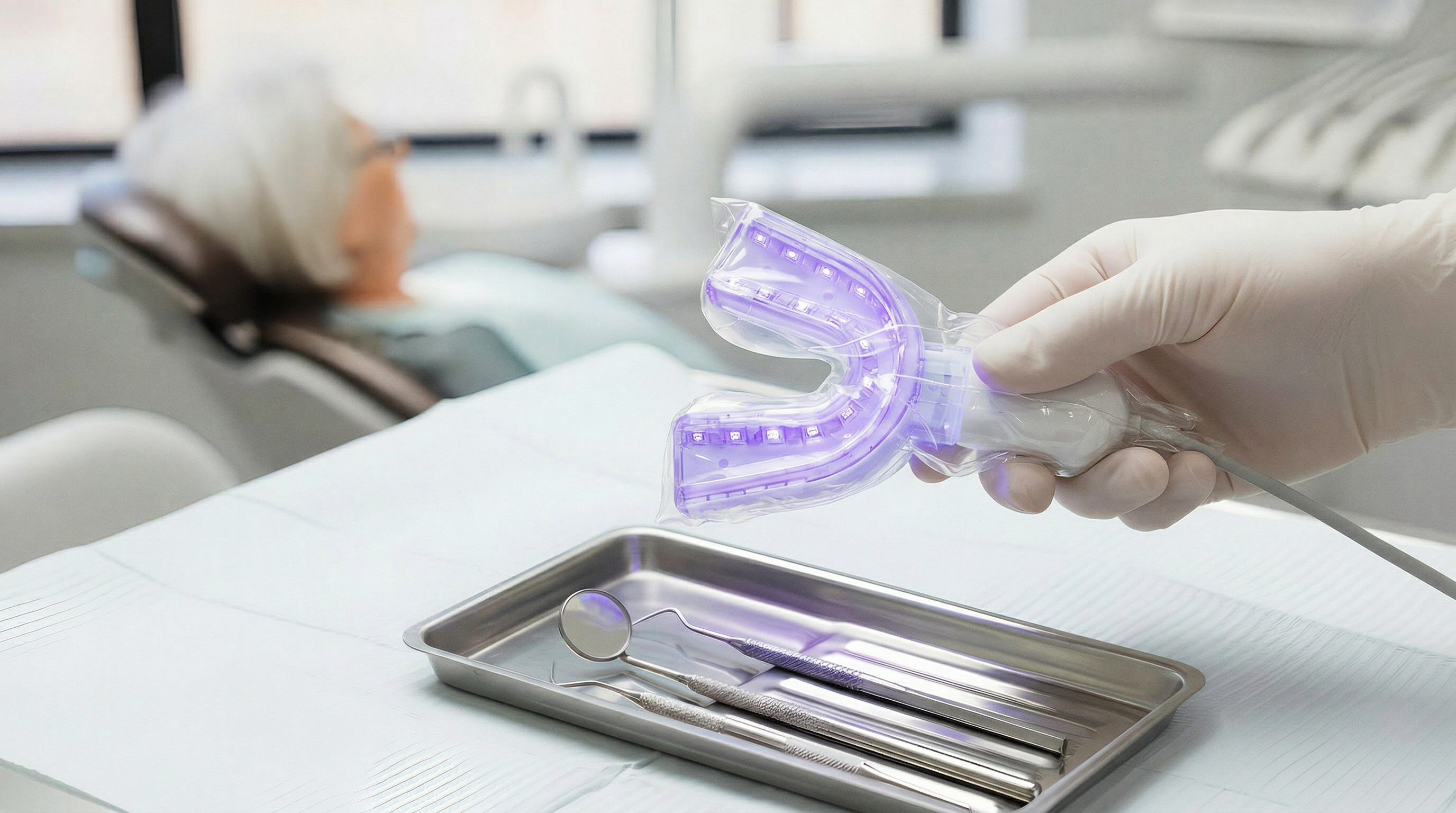
Use Lumoral as an antibacterial treatment step before or alongside selected clinical procedures. The patient rinses with Lumorinse and the treatment is activated with the Lumoral device using a patient-specific single-use protective cover.
This gives you a chance to introduce the treatment under your guidance and gives the patient a clear first experience of what they may later continue at home.

Lumoral at home
When continued support is indicated, the patient uses their own Lumoral mouthpiece and Lumorinse as part of Continuous Biofilm Control with Lumoral.
You define why it is being used, how it fits the wider care plan and what response will be reviewed at the next visit.
In the clinic, you start the treatment. At home, the patient continues it. At the next visit, you assess the response.
Easy 3-step routine

1. Swish
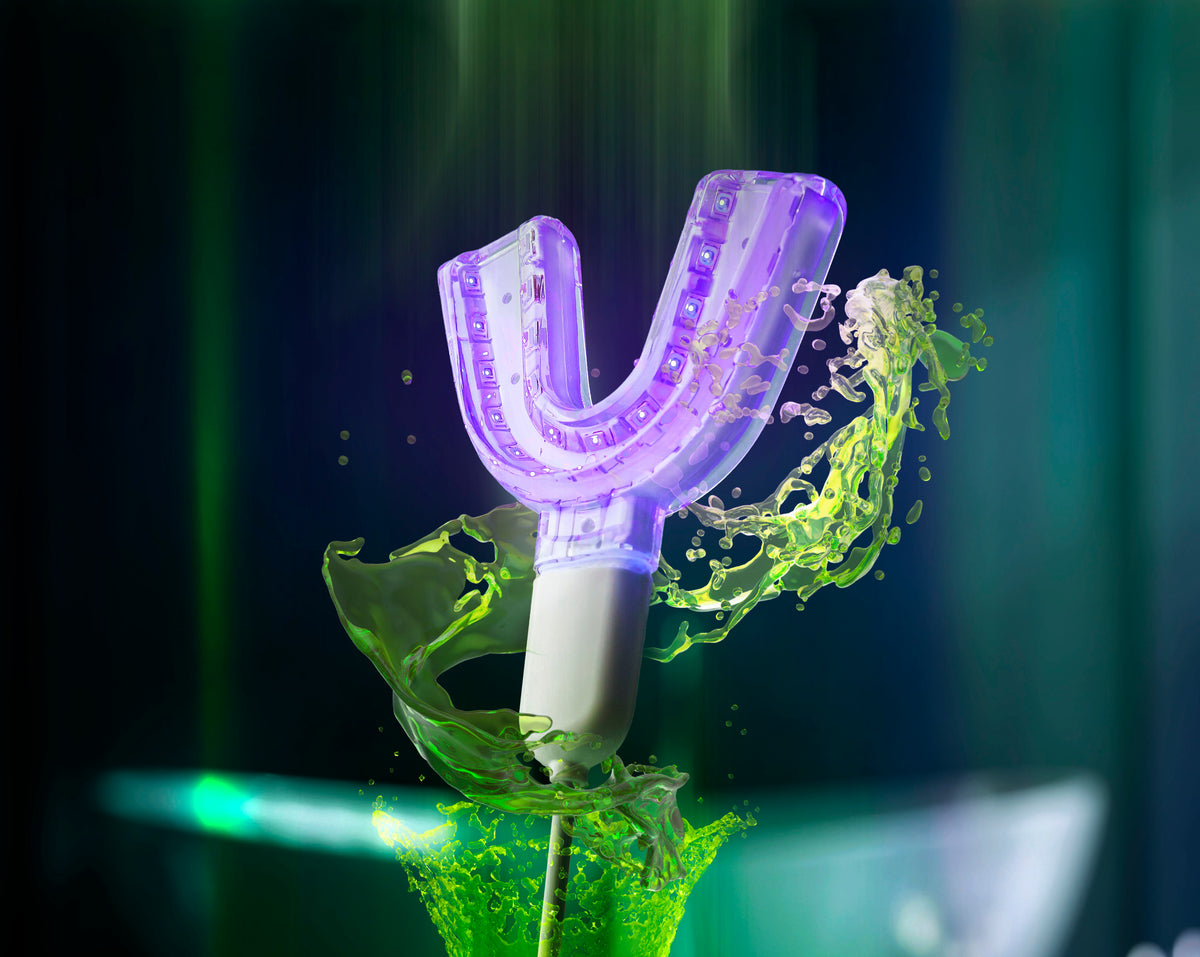
The patient swishes Lumorinse® mouth rinse for 60 seconds and spits it out. The light-sensitive dye indocyanine green binds to the biofilm. The binding of the photosensitizer is not necessarily visible to the eye.
2. Activate
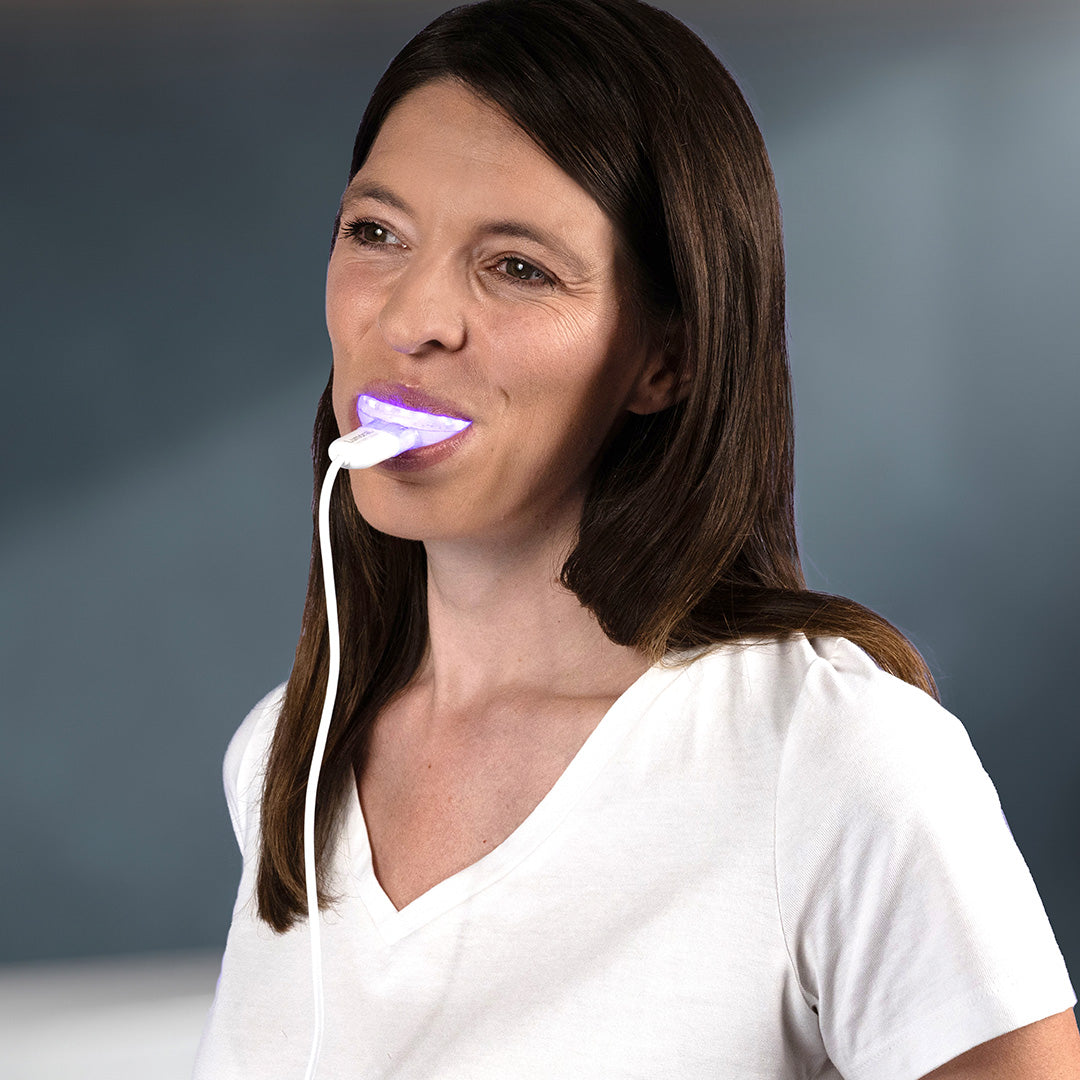
The patient places the Lumoral mouthpiece in the mouth for 10 minutes. Light activates the bound dye and the antibacterial effect begins. Warmth and increased saliva are normal parts of the treatment. No precise fit is needed and there is nothing to bite down on — the light switches off automatically.
3. Brush
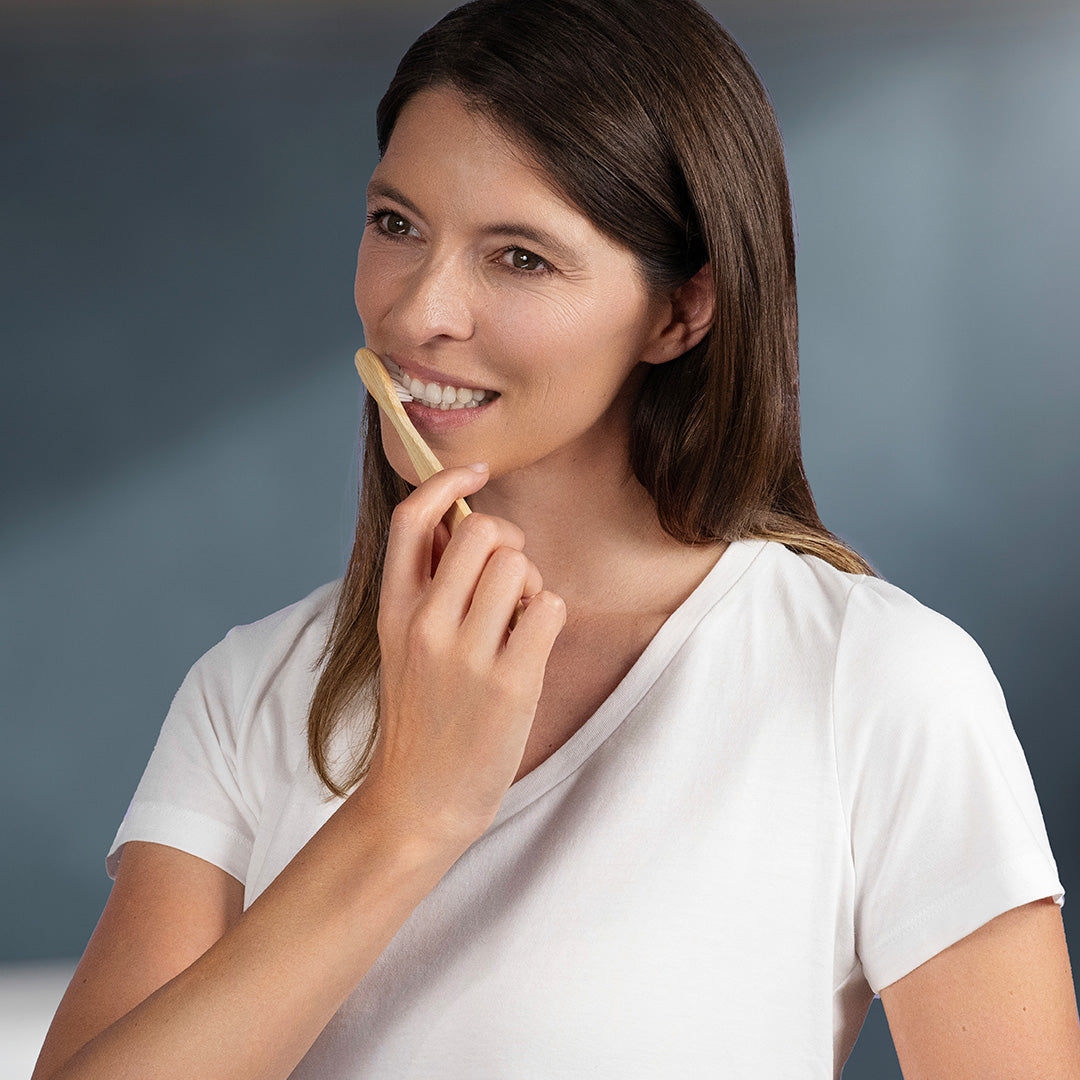
The patient brushes normally and cleans interdentally immediately after treatment.
At home, the mouthpiece is cleaned with dish soap and running water. In the clinic, the mouthpiece is used with a patient-specific single-use protective cover.
The value is not a device. It is a better next step.
Many clinics already have patients who want to move forward with implants, crowns, bridges, aligners, aesthetic treatment or long-term maintenance. The challenge is not always demand. Sometimes the mouth is simply not ready.
When biofilm control does not hold between visits, the next stage of care can stall. The same findings return, the same guidance is repeated, and treatment waits for better conditions.
Continuous Biofilm Control with Lumoral gives the team another step before simply waiting: a professionally guided treatment the patient can continue at home, while the clinic remains responsible for the indication, the plan and the follow-up.
A clinic does not need to change everything at once.
Start with one pathway.
Start where the need is already easy to recognise: aligner care, implant care, periodontal or peri-implant maintenance, or patients whose clinical response remains insufficient despite guided self-care.
We help you build Continuous Biofilm Control with Lumoral into that pathway: define when it is used, train the team, introduce the treatment in the clinic, support home use and decide what will be reviewed at follow-up.
Once it works naturally in one part of the care pathway, expanding it to others becomes much easier.
1. Identify the clinical moment
Start with the reason Lumoral is being considered. It may come up during a hygiene visit, implant or aligner consultation, periodontal follow-up, peri-implant maintenance visit, or when the same finding keeps returning.
The clinical reason comes first: bleeding, persistent biofilm, calculus formation, tissue condition, treatment readiness or maintenance risk.
2. Decide where Lumoral fits
Lumoral can be introduced in the clinic, continued at home, or used across both settings.
In-clinic treatment gives the professional a way to introduce the method as part of the visit. Home use adds repeatable biofilm control between appointments as part of the wider care plan.
3. Make the recommendation clinical
Connect Lumoral to three things the patient can understand: the finding, the goal and the follow-up.
Not: “You should buy this device.”
Instead: “This is what we are seeing. This is what we want to improve. This is why Lumoral is part of the plan, and this is what we will look at when you come back.”
4. Keep Lumoral connected to the care pathway
Home treatment should not become separate from the clinical plan once the patient leaves the clinic.
Keep the indication, guidance, treatment rhythm, Lumorinse refills and follow-up connected, so Continuous Biofilm Control with Lumoral remains part of the care pathway rather than an isolated home-care product.
5. Review the response
At follow-up, the question is not simply whether the patient used Lumoral or liked using it. Go back to the reason it was introduced.
Review the relevant clinical findings and patient experience, then decide whether the current approach should continue, change or no longer be needed.
The finding starts the plan. The response decides what happens next.

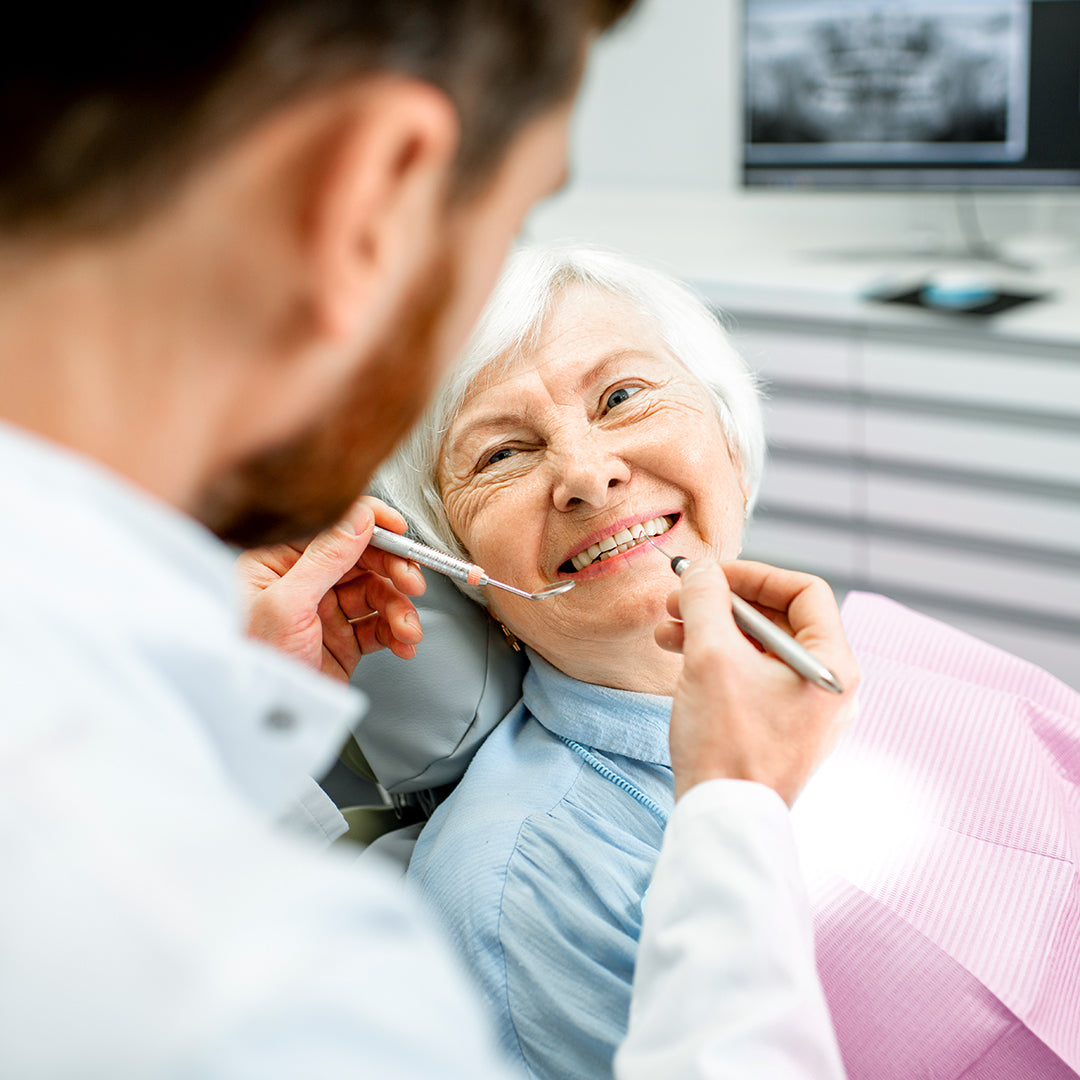
Periodontal care.
Faster stabilization, and periodontal health that holds between recalls — at the three moments where between-visit biofilm control changes the outcome: initial assessment, active treatment, and maintenance.
Step 01 · Initial assessment
Screen for biofilm, gingivitis, BOP, pocket depth and individual risk factors at the first exam. Where inflammation is already present, a short daily protocol before active therapy begins lowers plaque pressure and improves the tissue you're about to treat — using a preparation window that already exists in your workflow.
Step 02 · Active treatment
Following scaling and root planing or surgical therapy, daily use targets residual biofilm in pockets and interdental areas brushing reaches inconsistently — standard for Stage I–III periodontitis, moderate gingivitis, and peri-implant mucositis. For severe cases, twice-daily use may be considered per clinical judgement.
Step 03 · Maintenance
Once stability is reached, use shifts to twice weekly as a structured layer between recall visits — the period where relapse most often begins quietly.
Download the full protocol
Implant care.
Lower peri-implant risk from placement through lifetime maintenance — at the three points where between-visit biofilm control matters most: before surgery, during early healing, and long-term.
Step 01 · Pre-surgical stabilisation
For patients with a periodontitis history, limited posterior access, full-arch planning, smoking, or inconsistent plaque control, a short daily protocol before placement reduces avoidable inflammatory burden — framed to the patient as site preparation, not a delay.
Step 02 · Healing phase
Introduced post-operatively per clinical judgement, once early healing allows home use, to reduce plaque pressure while brushing access is limited and tissue is still establishing itself.
Step 03 · Long-term maintenance
A structured layer between recalls, limiting plaque maturation before it shows up as bleeding, inflammation, or rising biomarker activity — the phase where many implant cases begin to drift.
Download the full protocol
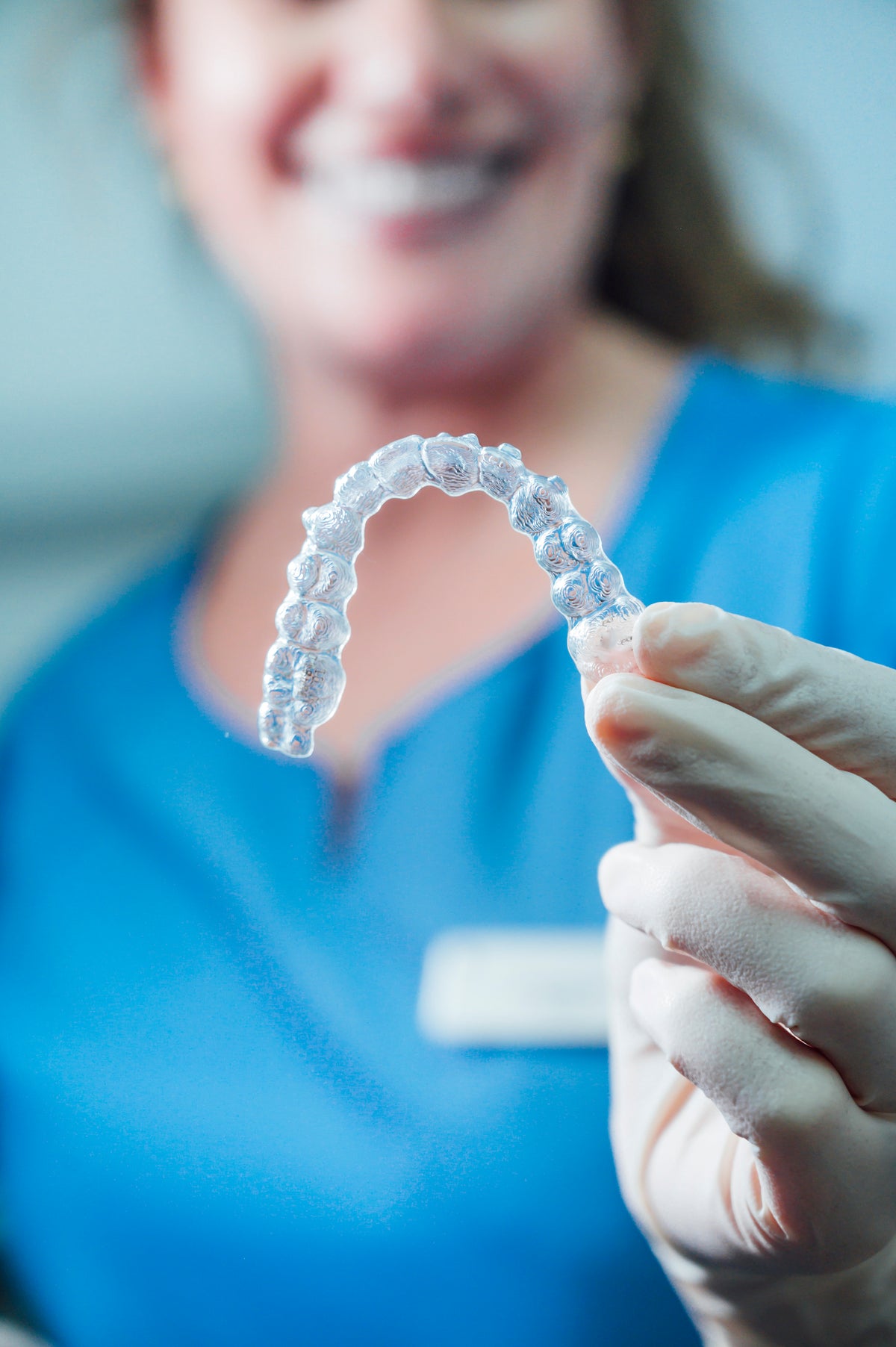
Orthodontic care.
Healthier gums and fewer white spot lesions across the full aligner arc — at three decision points already built into your workflow, no new structure required.
Step 01 · Pre-treatment
Any patient with BOP above 10% or visible marginal inflammation at consultation is prescribed a four-week protocol before scans or impressions. Framed to the patient as a quality gate, not a delay — healthier tissue means better aligner adaptation.
Step 02 · Active treatment
Standard: three sessions a week through active treatment, included in the starter kit. For higher plaque tendency or prior caries history: daily. Targets biofilm at aligner margins and interdental zones brushing reaches inconsistently, with no effect on aligner material or attachments.
Step 03 · Case completion
At the final appointment, assess BOP, VPI and enamel integrity alongside occlusal outcomes. Absence of white spot lesions and maintained gingival health are documentable results, worth building into case-completion records over time.
Download the full protocol
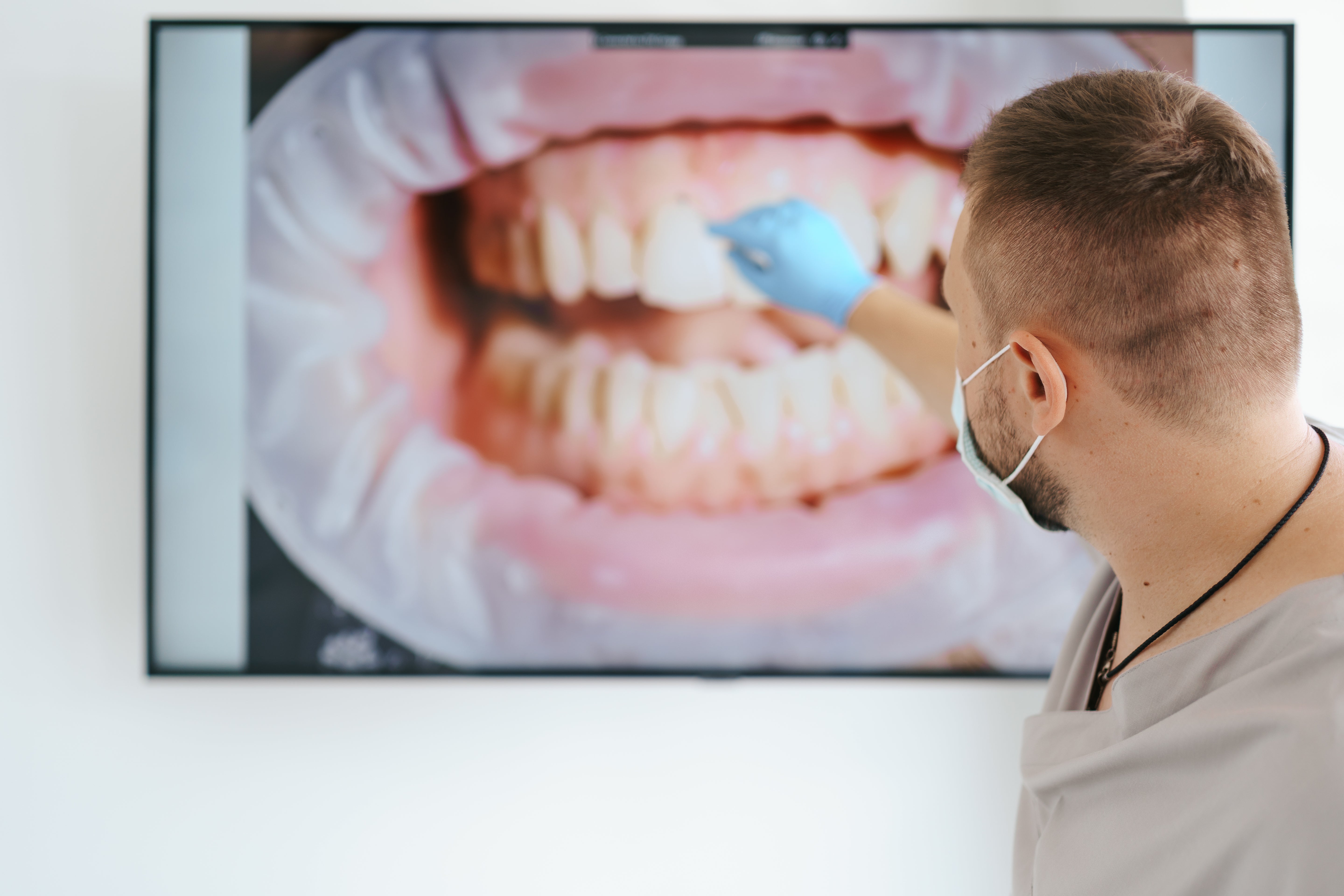
Maintenance care.
Non-responders start responding again, without reopening active treatment — the other moment to prescribe Continuous Biofilm Control: a maintenance patient who's stopped improving.
Step 01 · Recognise
At a maintenance recall, BOP or plaque hasn't improved, or has worsened, since the prior visit despite reinforced hygiene instruction. Nothing acute has happened yet, but the patient is drifting from stable toward recurrent.
Step 02 · Escalate
Move from maintenance frequency to daily use — the same frequency already defined for active therapy — without reopening active treatment itself.
Step 03 · Reassess
Re-check BOP and plaque at the next recall. Step back down to maintenance frequency once the numbers hold, the same way active treatment steps down once stability is reached.
Benefits for

the practice
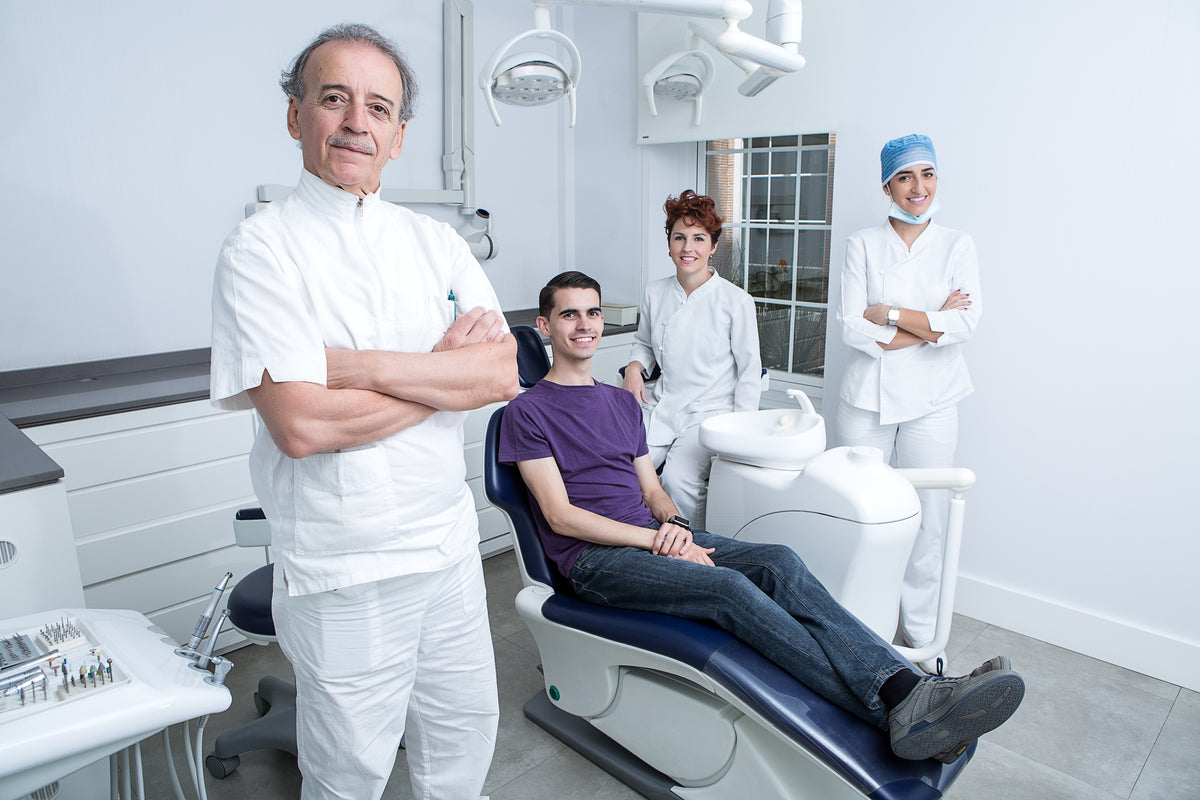
For the clinic owner.
Better care should also make the clinic work better.
When biofilm control does not hold between visits, the whole clinic feels it.
Dentists wait for patients to become ready for the treatment they already want. Hygienists spend appointment after appointment managing the same unresolved findings. Patients stay longer in maintenance cycles without always understanding why progress is not moving forward.
For the owner, this is not only a clinical issue. It is a capacity issue, a team issue and a patient-retention issue.
Lumoral helps the clinic turn biofilm control into a more structured pathway. The team gets a clearer next step. The patient gets a reason to stay engaged between visits. The clinic keeps the recommendation, refill pathway and follow-up connected to its own care process instead of sending the patient away to solve the problem alone.
The business value follows the care value: more patients moving toward readiness, stronger continuity, more meaningful follow-up and a team that can see progress instead of only repeating the same cycle.
Continuous Biofilm Control should not make the clinic feel more commercial. It should make the clinic feel more in control of the care it already wants to deliver.

For the dentist.
When the mouth is not ready, treatment waits.
Many patients already want the next step: implants, aligners, restorations, whitening or aesthetic care. The limiting factor is often not interest. It is whether the oral environment is stable enough to move forward.
That is where the frustration begins. The treatment plan may be clear, the patient may be motivated, and the clinical opportunity may be there — but bleeding, plaque, calculus or inflammation keeps slowing the pathway down.
Lumoral gives the dentist a way to support treatment readiness beyond the chair. Continuous Biofilm Control adds a structured between-visit treatment layer to the plan, so the conditions needed for care can be supported in the days and weeks when the patient is at home.
The dentist does not lose clinical control. The indication, timing, treatment goal and follow-up stay in professional hands.
The result is not simply another home-care product. It is a stronger way to protect the biological conditions that make high-value treatment possible.
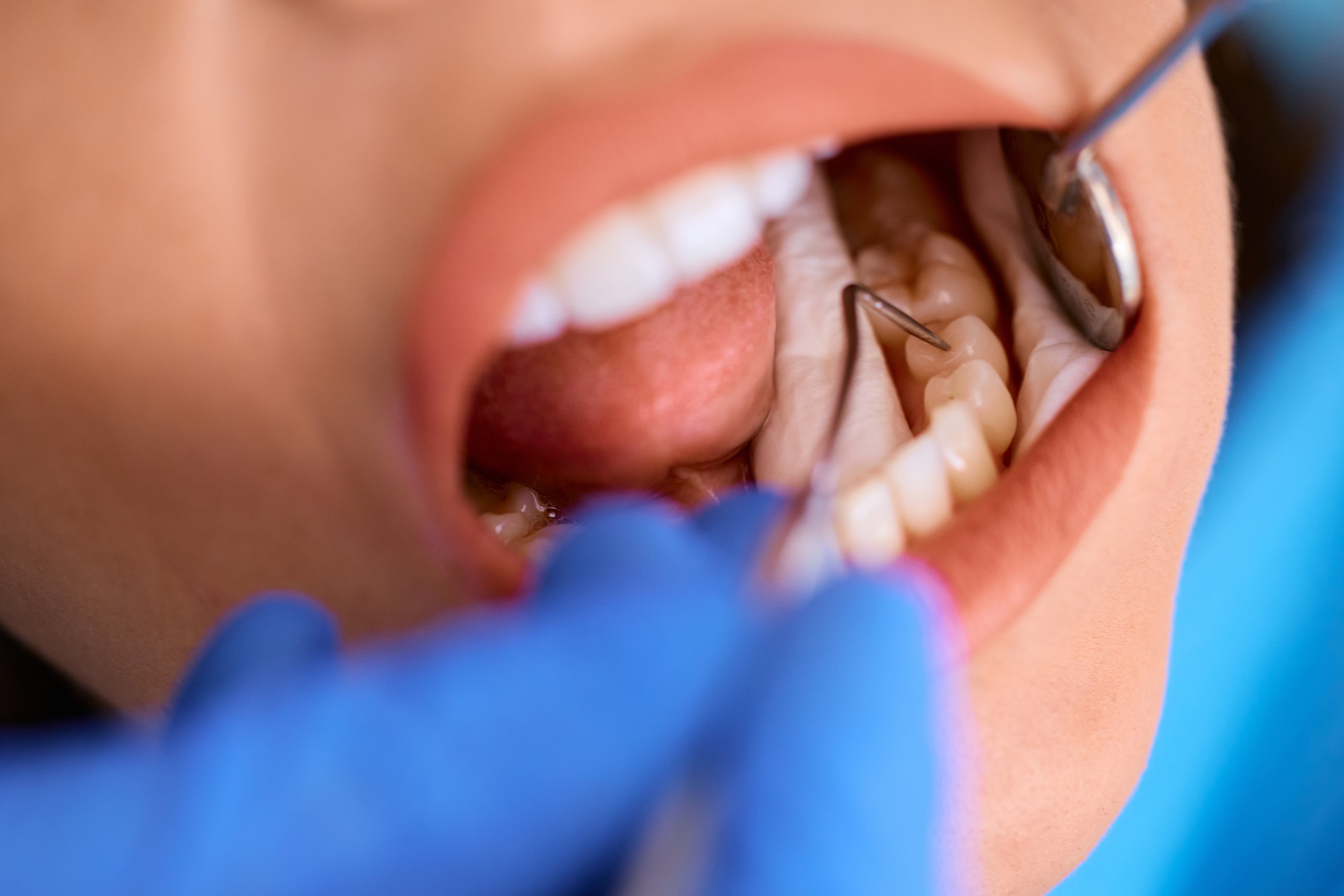
For the hygienist.
When advice has reached its limit, care needs another step.
Every hygienist knows the patient who listens, tries, returns — and still comes back with the same bleeding, plaque or calculus.
At first, more instruction makes sense. Technique can be improved. Motivation can be supported. Routines can be made easier. But when those conversations have already happened and the clinical response is still not enough, repeating the same advice can start to feel unfair to everyone.
The patient feels judged. The hygienist feels stuck. The appointment becomes a familiar cycle: same finding, same conversation, same hope that this time it will hold.
Lumoral gives the hygienist a different next step. It turns the conversation from “try harder” into “let’s support this differently.”
With Continuous Biofilm Control, the hygienist can recommend a guided treatment layer at home, connect it to a clear clinical reason, and review the response at the next visit.
That is not selling a device. It is extending care into the part of the patient’s life where the result is actually being tested.
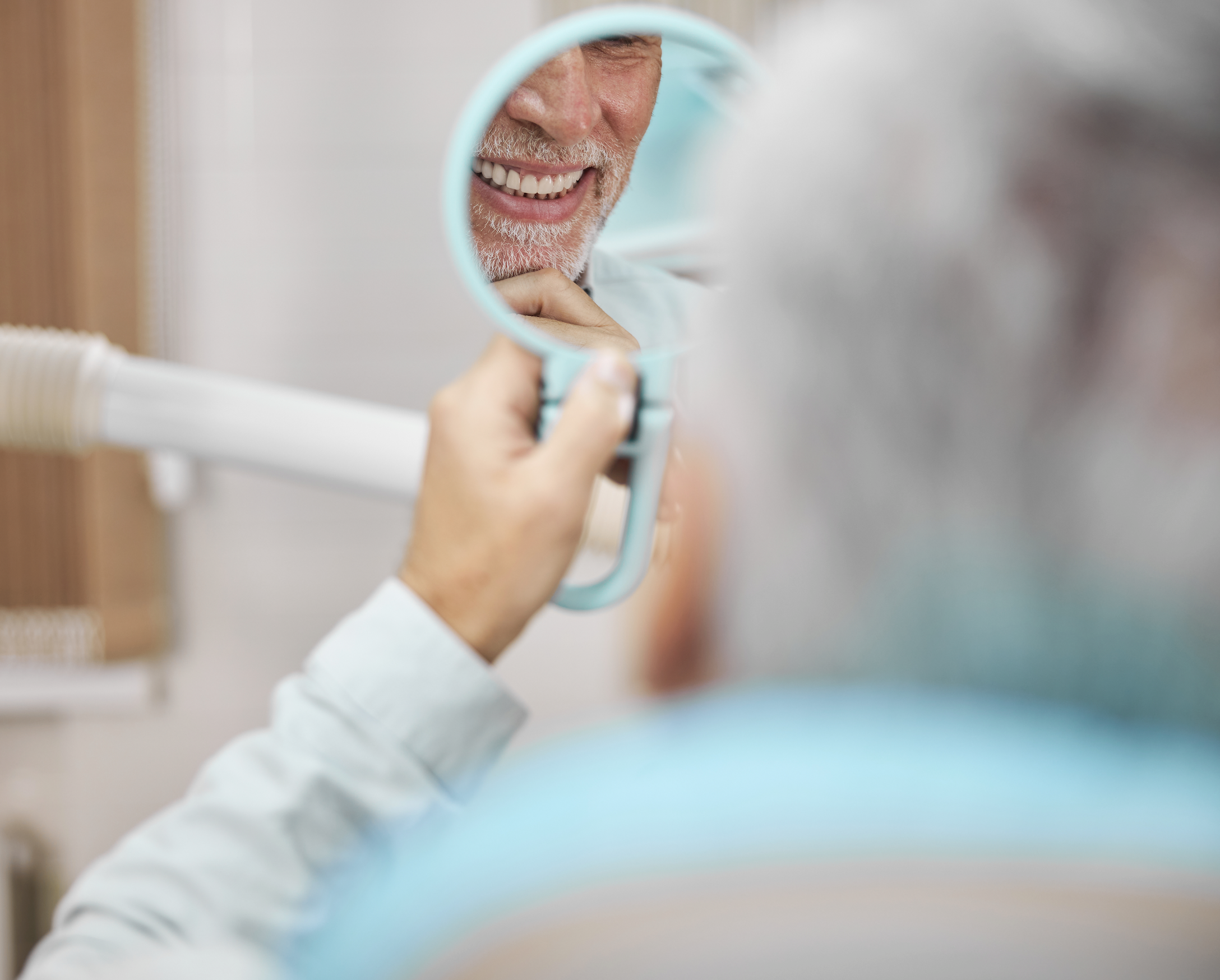
For the patient
Not more blame. A clearer way forward.
For many patients, recurring bleeding, plaque or calculus does not feel like a clinical finding. It feels like failure.
They may have tried to improve. They may have bought the brush, used the interdental tools, listened to the advice and still returned with the same problem. At that point, another reminder can feel discouraging, even when it is clinically correct.
Lumoral changes the tone of the conversation.
Instead of simply asking the patient to try harder, the professional can give them a defined treatment moment at home, a clear reason for using it and a follow-up point where progress can be reviewed.
That makes home care feel less like a test of willpower and more like part of the treatment plan.
The patient still has responsibility, but they are not left alone with it. They get a practical way to support biofilm control between visits — guided by the professional who understands their mouth, their risk and their treatment goals.
Protect your highest-value cases
Implant and aligner complications cost far more in redos and extended care than a protocol costs to run. A documented pre-treatment step protects a case you've already committed chair time and lab costs to.
Revenue that doesn't need more chair time
Your chairs are already full. Starter kits and Lumorinse reorders are one of the few revenue lines that grows without taking more of your booked hours.
Fewer patients quietly drifting away
A patient with an ongoing reason to stay engaged — refills, follow-up, visible progress — is one you don't have to win back from a competitor or a pharmacy shelf.
A word-of-mouth channel you don't have to run
Patients who become ready for the treatment they actually wanted talk about it, without a marketing budget behind it.
Lower hygienist turnover
People leave jobs that never feel like they're winning. Recruiting and retraining costs more than most owners track. Visible progress at recall is a retention tool for your team, not just your patients.
Outcomes you can document, not just describe
Structured protocols produce an actual record — no white spot lesions, stable peri-implant tissue at recall — that supports case acceptance conversations and referral relationships, not just something you tell a colleague over coffee.
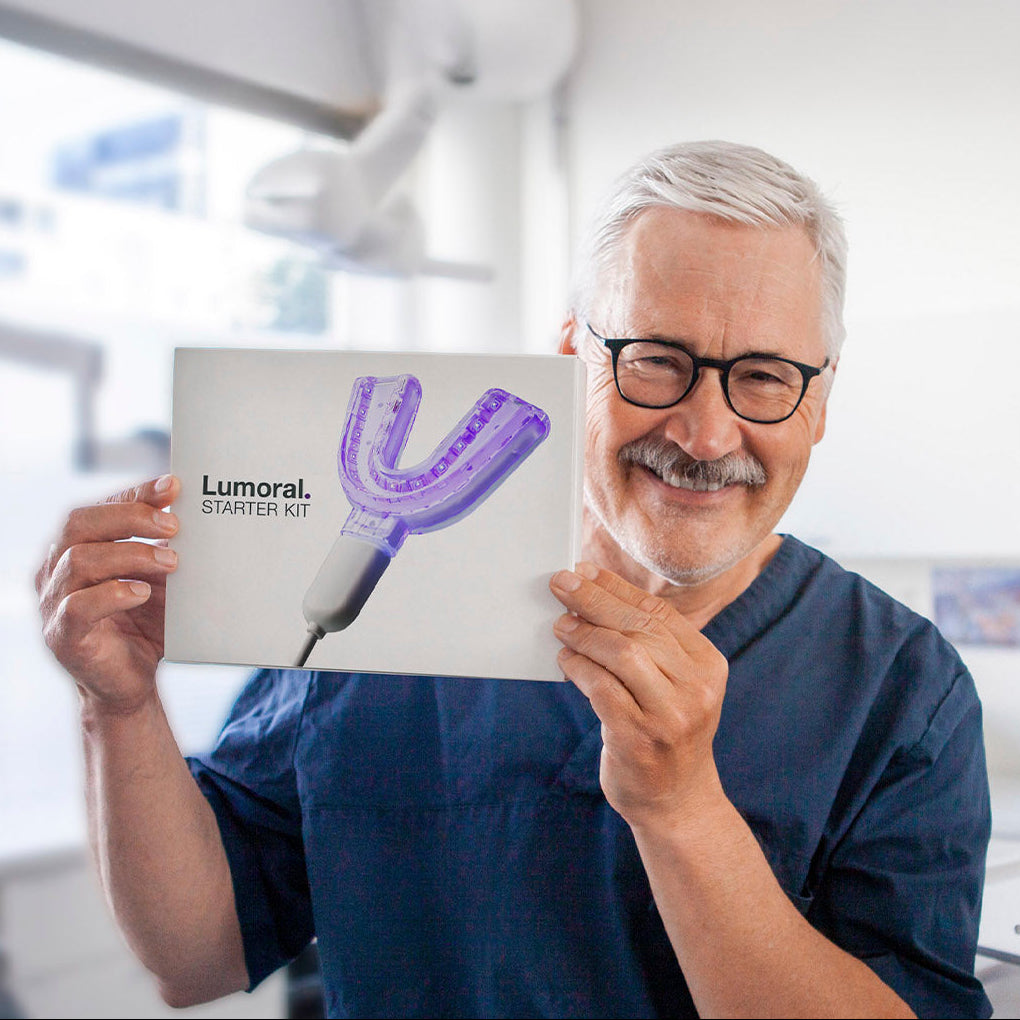
Bring the next standard of home care into your own hands.
Every clinic is careful about what it brings into patient care. It should be. A new protocol has to earn trust from the dentist, the hygienist, the patient and the practice around them.
Lumoral was built for that kind of adoption. The indication stays with the professional. The treatment fits into the care pathway. The patient gets a clear role at home. The response is followed where it matters: back in the clinic.